Mission 001
Dinnington Common.
A prominent patch of common land at the junction of Oldcoates Road and St Johns Road, now being researched as LeafTide’s first local restoration project.
The place
A neglected piece of Dinnington with the potential to become a living community space.
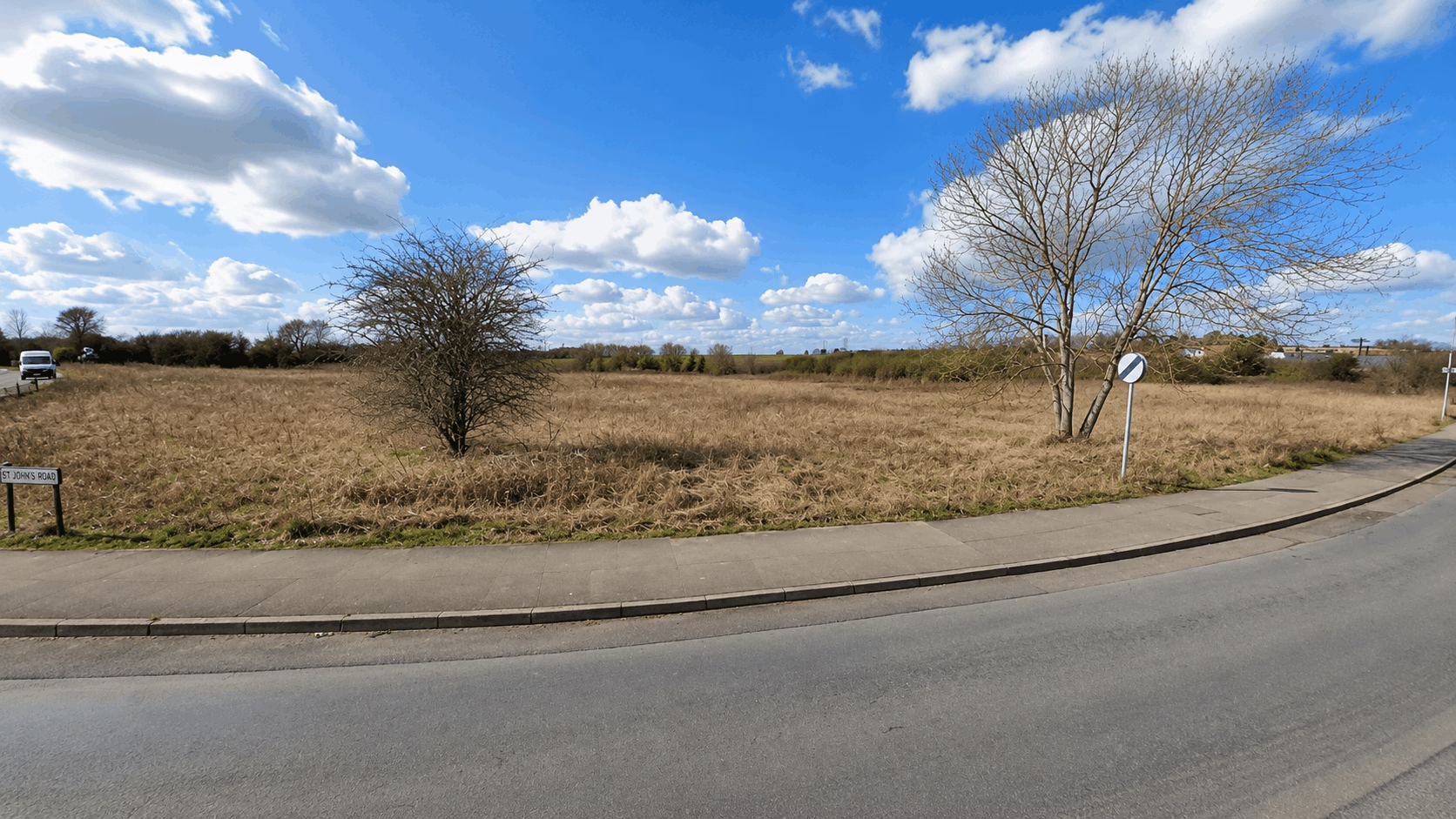
Dinnington Common sits at the junction of Oldcoates Road and St Johns Road. It is visible, familiar and full of possibility, yet for years this patch of common land has gradually been left to decline.
LeafTide’s proposal is not to erase or overdevelop the site. The aim is to enhance what is already there, carefully and lawfully, so nature can recover and the local community can feel proud of the change taking place.
Our current work is research-led: understanding permissions, ownership records, ecology, soil, existing vegetation, community views and the guidance needed from Rotherham Metropolitan Borough Council and relevant environmental bodies.
Before and vision
From overlooked common land to a healthier natural space.
Common land
What is common land?
Common land is land with a special history. In many places, landowners allowed local people, known as commoners, to exercise certain rights on the land. These rights could include grazing animals, collecting natural materials, or in some local traditions growing, gathering or using produce from the land.
Today, many communities rely on supermarkets and modern services, so historic commoners’ rights are often forgotten. But the rights and legal protections around common land can still exist, and they matter.
That is why LeafTide is approaching Dinnington Common carefully. Restoration must respect access, history, law and local people, not simply impose an idea onto the site.
Ownership and permissions
Who owns it, and what can be done?
All land has an ownership history, but records can become unclear over time. Extensive early research has not yet identified anyone currently taking ownership responsibility for this land.
Common land is protected by a range of rules. In simple terms, it cannot just be built on, enclosed, fenced off to exclude people, surfaced over or altered in ways that prevent or impede lawful access without the correct permissions.
Under the Commons Act 2006, certain restricted works on registered common land can require consent, including works such as fencing, buildings, structures, ditches, trenches, embankments and new solid surfaces where they prevent or impede access.
LeafTide’s approach is therefore to work openly with the council, relevant authorities, environmental experts and the community before any physical work takes place.
Our proposal
Enhance, do not overtake.
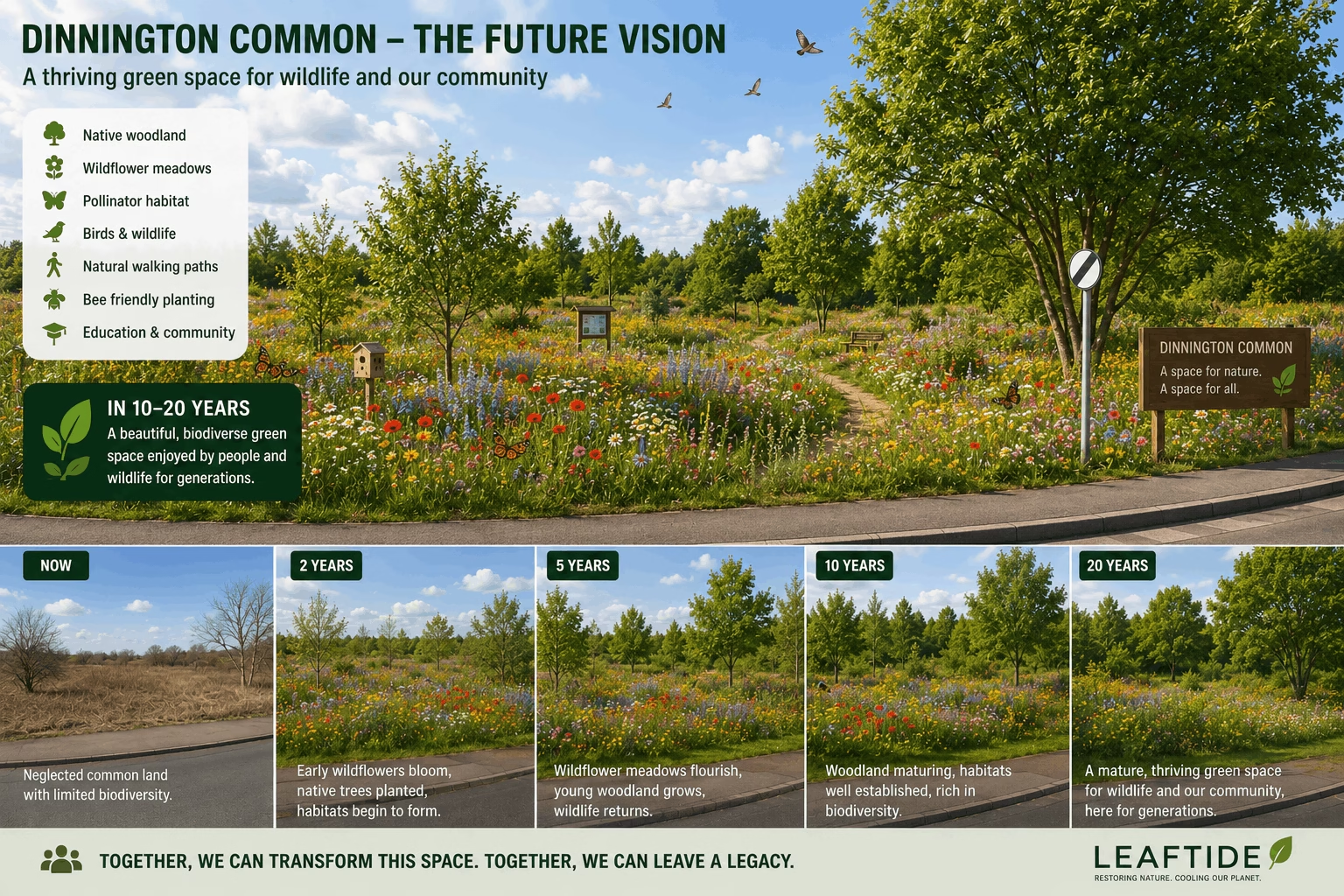
As the vision image shows, the proposal is to improve Dinnington Common without excluding people from it. With a considered mix of native trees, a small community orchard, sections of wildflowers and natural footpaths, this area could become a haven for pollinators, birds, insects and local wildlife.
The final design will depend on research, permissions, soil conditions, biodiversity value, common land rules and community feedback.
Right habitat. Right place. Lasting impact.
Project progress
Our journey to restoring Dinnington Common.
Every successful nature restoration project begins with careful planning. This tracker follows the project’s real journey rather than pretending progress is a simple percentage.
Phase 1 – Research & Surveys
Confirm permissions, research land ownership, carry out wildlife and habitat surveys, test soil and vegetation, work with local authorities and listen to the community.
Estimated: 3-6 monthsPhase 2 – Site Preparation
Remove litter and invasive plants, protect existing trees and valuable habitats, mark out future walking routes and prepare areas for planting.
Estimated: 1-2 monthsPhase 3 – Planting for the Future
Plant native British trees, sow wildflower meadows, install bee hotels and bird boxes, and create habitats for local wildlife.
Estimated: autumn planting seasonPhase 4 – Nature Takes Over
Young woodland begins to establish, wildflowers bloom, wildlife returns in greater numbers and the community begins enjoying the space.
Goal: allow the ecosystem to grow naturallyPhase 5 – A Living Legacy
Mature native woodland, established wildflower meadows, rich habitats, educational visits and long-term community engagement.
Goal: leave nature better than we found itHelp shape the first mission
Together, we can create a greener future for Dinnington.
Every tree planted, every wildflower sown and every habitat created brings this neglected land one step closer to becoming a thriving home for wildlife.